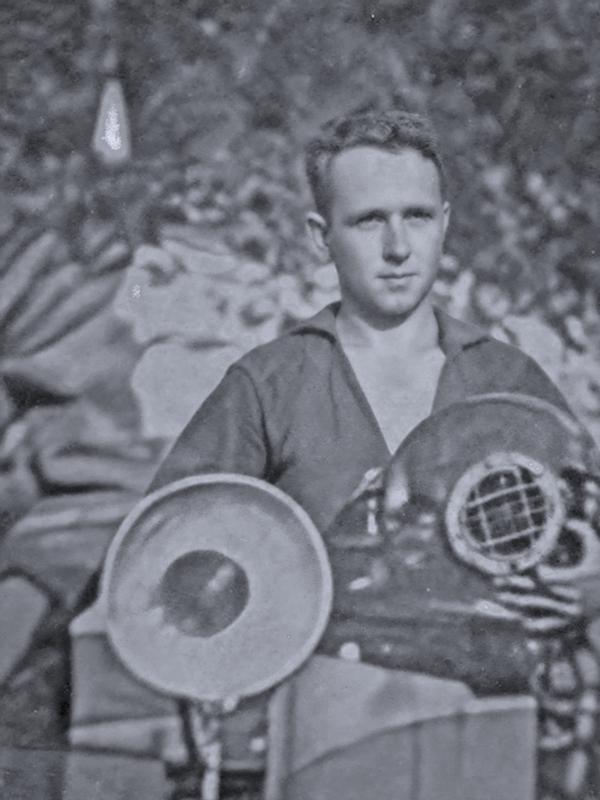
| The author’s grandfather, originally from Mount Vernon, was both an oysterman and a hard-hat diver. I heard stories of him and other divers harvesting oysters by hand in the frigid waters of the Chesapeake Bay during the 1930s.
Harvesting wild oysters by diving is one of the most grueling, selective, and ecologically friendly fishing traditions in the Chesapeake Bay. While the vast majority of modern watermen use massive mechanical dredges or long hand-shaft tongs from the surface, a dedicated and hardy few plunge directly into the frigid, murky winter waters to pick oysters entirely by hand.
Commercial oyster diving has been legally recognized in Maryland since 1973. It accounts for a small but significant portion of the annual wild catch—sometimes exceeding 10% to 13% of the total state harvest depending on the season.
--------------------------------------------------------------------------------------------
**Oyster Diving in the Chesapeake Bay**
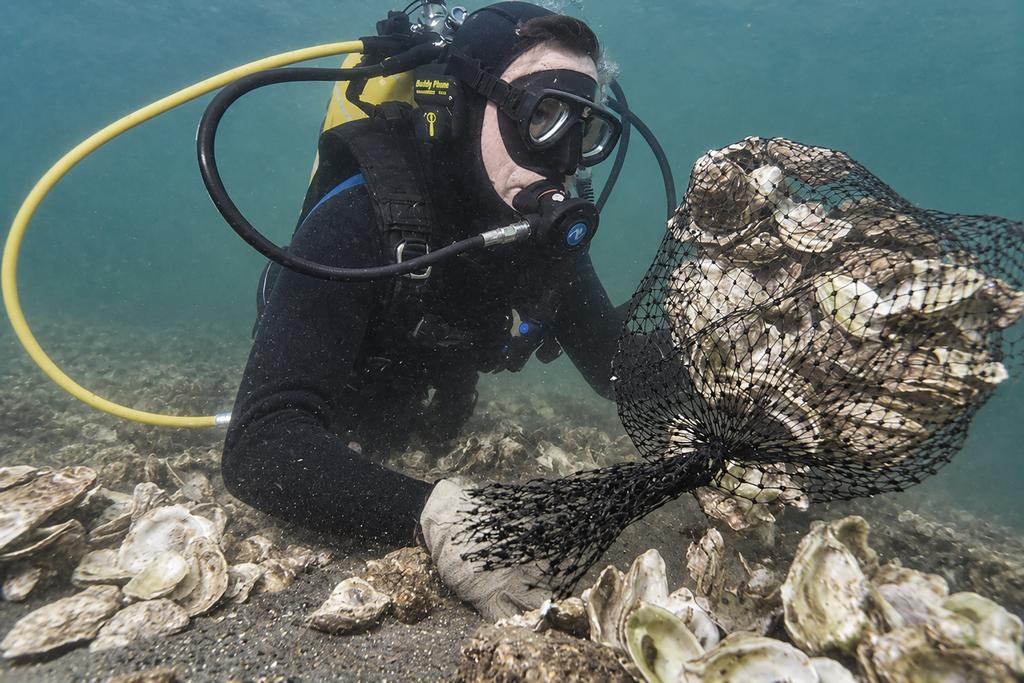
Oyster divers harvest shellfish by hand, working directly on the Bay’s oyster bars. The work demands endurance, careful judgment, and close coordination with an attendant aboard the boat.
- **Cold Conditions:** Maryland’s public commercial oyster season typically runs from **October 1 through March 31**, although dates and restrictions can vary by harvest method, location, and state notices. Much of the work takes place during the colder months.
- **Limited Visibility:** Murky water and disturbed sediment can make underwater visibility extremely poor. Divers may rely heavily on touch to locate oysters and distinguish shell-covered bars from surrounding mud or sand.
- **Selective Harvesting:** Hand-picking allows divers to select individual oysters and avoid collecting many unwanted organisms. This selectivity can reduce disturbance compared with dragging harvesting gear across the bottom, although removing oysters still affects the reef.
**Methods and Equipment**
Divers may use **SCUBA equipment** or **surface-supplied air systems**, commonly called hookah rigs, which deliver breathing air through a hose from the boat. Protective clothing suited to the conditions helps reduce cold exposure.
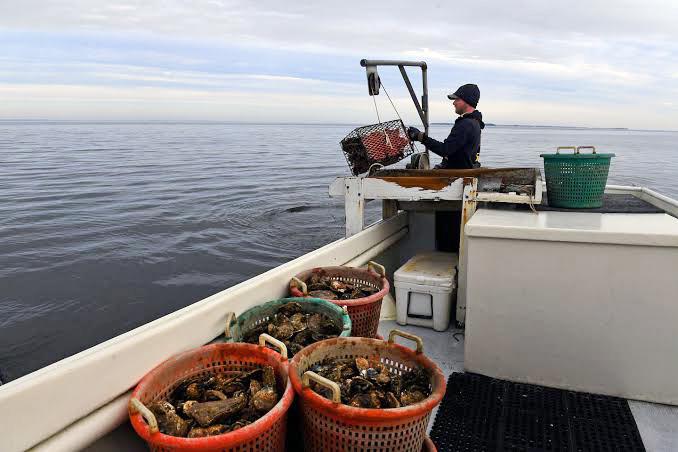
On the bottom, divers gather oysters into collection bags or baskets. An attendant aboard the boat assists with the operation and retrieval of the catch. Maryland permits power-assisted lifting devices for commercial oyster diving, subject to specific equipment requirements.
**Maryland Harvest and Safety Rules**
- **Divers and Attendants:** For commercial oyster diving, no more than **two divers may work from a boat at one time**. Each diver must have a separate attendant aboard.
- **Required Flag:** While a commercial oyster diver is underwater, the boat must display a **rigid replica of International Code Flag “A,” or Alpha**, measuring at least **one meter in height**.
- **Separation From Harvesting Boats:** Other shellfish-harvesting operations may not operate within **50 feet** of a vessel involved in a diving operation.
- **Minimum Size and Culling:** Marketable oysters generally must measure at least **three inches from hinge to bill**. Loose shells and undersized oysters must be returned to the bar where they were caught. Limited exceptions apply to spat and undersized oysters attached to marketable oysters.
- **Protected and Restricted Areas:** Public harvesting is prohibited in oyster sanctuaries and other closed areas. Harvest reserves may open under specific state notices. Aquaculture leases operate under separate rules and are not open to general public harvesting.
Harvesters must follow current Maryland requirements for licensing, seasons, catch limits, approved areas, and water-quality closures. |



 Oct 17, 2026