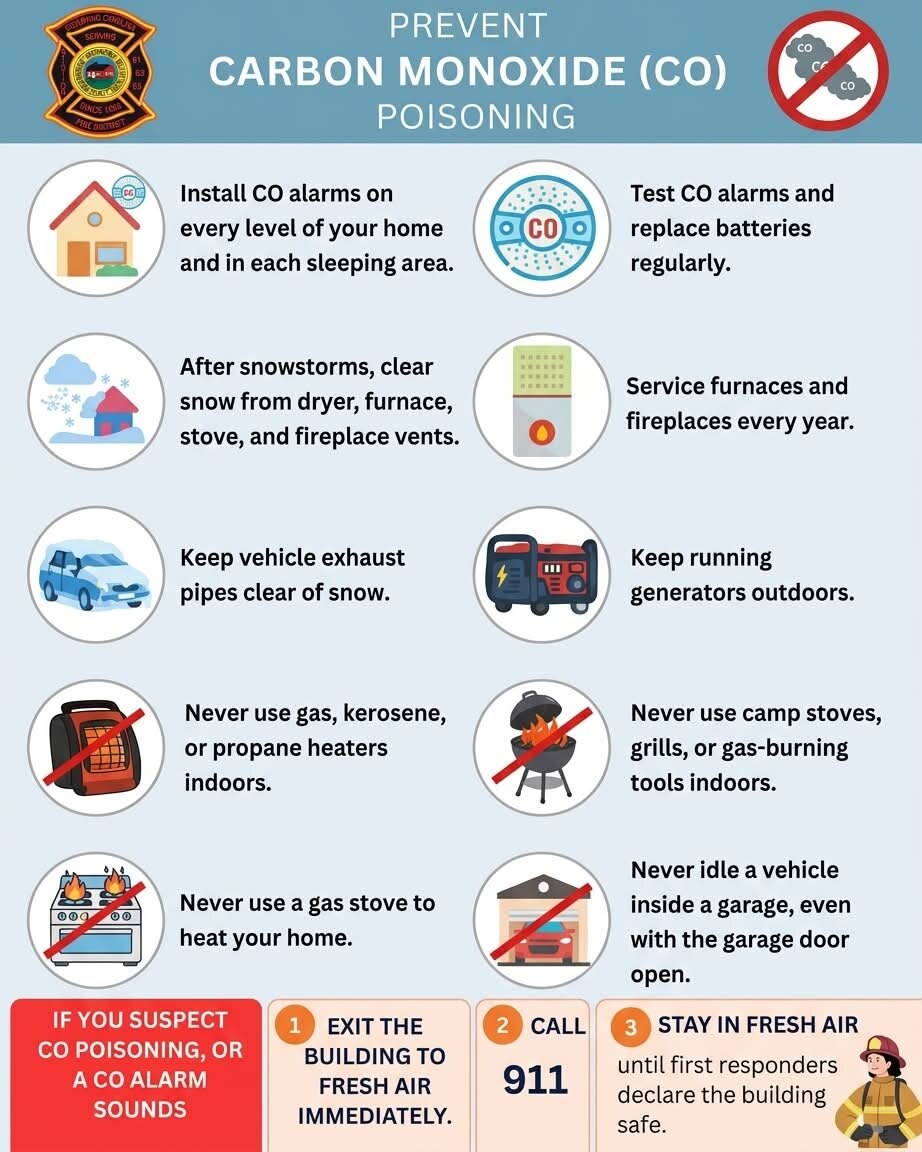
🔴CARBON MONOXIDE (CO) IS INVISIBLE, ODORLESS, TASTELESS, AND CAN KILL IN MINUTES 🚨🚨WHEN A CARBON MONOXIDE ALARM SOUNDS ➡️ EXIT THE BUILDING TO FRESH AIR IMMEDIATELY ➡️ CALL 911 ➡️ STAY IN FRESH AIR UNTIL FIRST RESPONDERS DECLARE THE BUILDING IS SAFE T

 
By Richmond - Carolina Fire District
October 27, 2026
 

🔴 SYMPTOMS OF CARBON MONOXIDE POISONING include headaches, chest pain, shortness of breath, nausea, vomiting, weakness, confusion, and loss of consciousness.

🔴 CARBON MONOXIDE SOURCES INCLUDE:
Grills, camp stoves, furnaces, water heaters, fireplaces, wood stoves, gas ranges, non-electrical heaters, vehicles, boats, fuel-burning equipment, e.g., chainsaws.

🔴AVOID CARBON MONOXIDE EXPOSURE:
• After snowstorms, clear snow from dryer, furnace, stove, and fireplace vents.
• Keep generators outdoors, away from people, windows, doors, and vents.
• Never idle a vehicle inside a garage, even with the garage door open.
• Service fuel-burning appliances every year.
• Never use camp stoves, grills, or gas-burning tools indoors.
• Never use gas, kerosene, or propane heaters indoors.
• Never use a gas stove to heat your home.
• Keep vehicle exhaust pipes clear of snow.

🟡INSTALL CARBON MONOXIDE ALARMS IN YOUR HOME:
• On every floor.
• In every sleeping area.
• Near every fuel-burning appliance.
• At doors leading to attached garages.
• In every room over a garage.

🟡CARBON MONOXIDE ALARMS SHOULD:
• Have battery back-ups.
• Be tested regularly.
• Have batteries replaced annually.
• Interconnect so if one sounds, all sound, if possible.

🐶PETS are more vulnerable to CO than humans: Most CO alarms do not sound below 70 ppm - levels fatal to pets. Get CO alarms that are sensitive at lower levels. Watch pets for abnormal behavior.

🔗Learn more: https://www.cdc.gov/carbon-monoxide/about/index.html