|
|
||
|
|
||
Day 7 Holiday Fire Safety & What Information is required when Calling 911 |
| By Fire Prevention Team | |
| October 10, 2026 | |
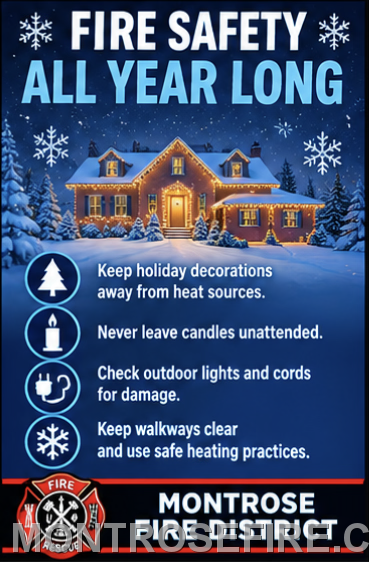
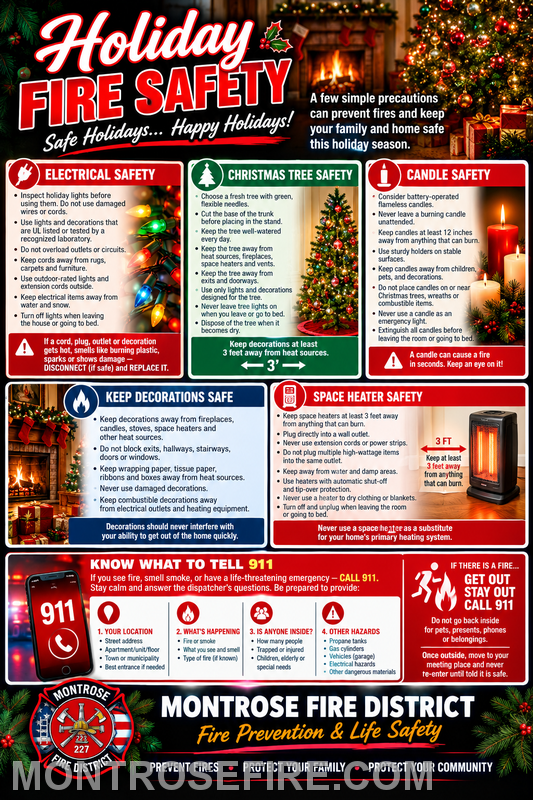
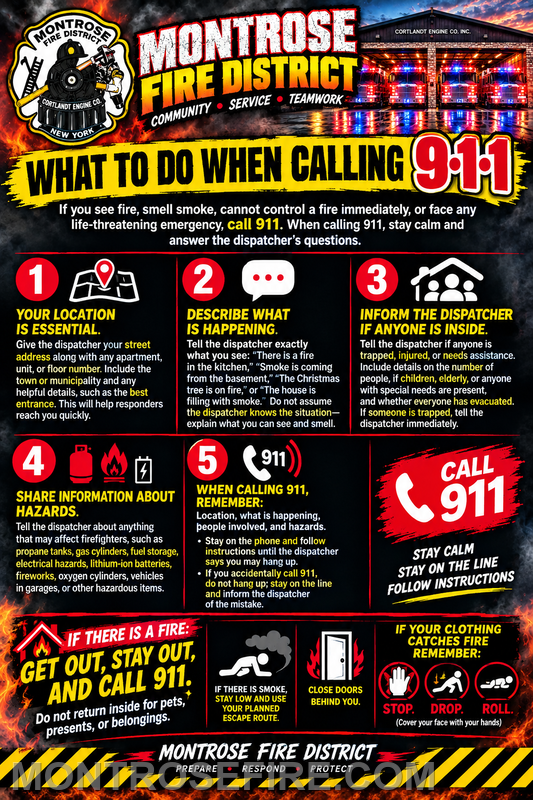
| The holiday season brings family, friends, and celebration. However, decorations, candles, Christmas trees, cooking, and extra electrical equipment can increase fire risks. Simple precautions can help keep your family and home safe. Holiday lights and decorations put additional strain on your home's electrical system. Inspect all lights before use. Do not use lights with frayed, cracked, pinched, or damaged wires. Use only lights and electrical decorations tested by recognized laboratories such as UL. Follow manufacturer instructions for connecting light strands and do not overload outlets or circuits. Never run cords under rugs, carpets, furniture, or across walkways where they can be damaged. Keep electrical connections away from water unless equipment is rated for outdoor use. Use outdoor-rated lights and extension cords when decorating outside. Keep cords away from snow, standing water, and other hazards. Do not use damaged electrical decorations. Turn off holiday lights and decorations each time you leave the house or go to bed. Never use nails or staples to hang light strands where they can damage wiring. If a cord, plug, outlet, or decoration becomes hot, smells like burning plastic, sparks, or shows signs of damage, disconnect it if it is safe to do so and replace it. A dry Christmas tree can quickly become dangerous and catch fire. If you have a live tree, select one with green, flexible needles. Cut the base of the trunk before placing the tree in its stand. Keep the tree well-watered and check the water level daily. Keep the tree away from fireplaces, heaters, radiators, vents, and other sources of heat. Place the tree away from exits and doorways. Decorate only with lights and ornaments intended for tree use. Never leave tree lights on when you leave the home or go to bed. Dispose of the tree promptly once it becomes dry. The U.S. Fire Administration recommends keeping decorations at least 3 feet away from heat sources and watering natural Christmas trees daily. Candles are an open flame and can ignite decorations, curtains, and furniture easily. Consider using battery-operated flameless candles. Never leave a burning candle unattended. Keep candles at least 12 inches away from anything that can burn. Place candles in sturdy holders on stable, level surfaces. Keep them away from children and pets. Never place candles on or near Christmas trees, wreaths, or other decorations. Keep candles away from curtains, wrapping paper, furniture, and other holiday decorations. Do not use candles as emergency lights—use a flashlight. Extinguish candles before leaving the room or going to bed. Holiday decorations can become fuel for a fire. Keep them away from fireplaces, candles, heaters, stoves, and other heat sources. Do not block exits, hallways, stairways, doors, or windows with decorations. Keep wrapping paper, tissue, ribbons, and boxes away from fireplaces and heating equipment. Never use damaged decorations or ones meant for indoors outdoors. Keep combustible decorations away from electrical outlets and heating equipment. Decorations should never block your path to safety in an emergency. What to do when Calling 9.1.1 If you see fire, smell smoke, cannot control a fire immediately, or face any life-threatening emergency, call 911. When calling 911, stay calm and answer the dispatcher’s questions. Your location is essential. Give the dispatcher your street address along with any apartment, unit, or floor number. Include the town or municipality and any helpful details, such as the best entrance. This will help responders reach you quickly. Describe what is happening. Tell the dispatcher exactly what you see: "There is a fire in the kitchen," "Smoke is coming from the basement," "The Christmas tree is on fire," or "The house is filling with smoke." Do not assume the dispatcher knows the situation—explain what you can see and smell. Inform the dispatcher if anyone is inside, trapped, injured, or needs assistance. Include details on the number of people, if children, elderly, or anyone with special needs are present, and whether everyone has evacuated. If someone is trapped, tell the dispatcher immediately. Share information about hazards that may affect firefighters, such as propane tanks, gas cylinders, fuel storage, electrical hazards, lithium-ion batteries, fireworks, oxygen cylinders, vehicles in garages, or other hazardous items. When calling 911, remember: location, what is happening, people involved, and hazards. Stay on the phone and follow instructions until the dispatcher says you may hang up. If you accidentally call 911, do not hang up; stay on the line and inform the dispatcher of the mistake. If there is a fire: Get out, stay out, and call 911. Do not return inside for pets, presents, or belongings. If there is smoke, stay low and use your planned escape route. Close doors behind, If your clothing catches fire remember to STOP. DROP. (Cover your face with your hands) and Roll! If you have questions or concerns about fire safety, please contact us at info@montrosefire.com. For emergencies, dial 911. As this wraps up our 7 Day's of Fire Prevention post, This does not stop Fire Prevention Training and Prevention.. Fire Prevention is a 365 Day practice and prevention. The Montrose Fire District is 100% Volunteer Fire Department and is always looking for future firefighters to join our ranks. If you are at least 17 years old and would like to join please visit our Join our Team on the main website page for an application. There is a job for all ages. |
|
| Hyperlinks: | Join Our Team |
|
|
||
|
|
||