| By Fire Prevention Team | |
| October 6, 2026 | |
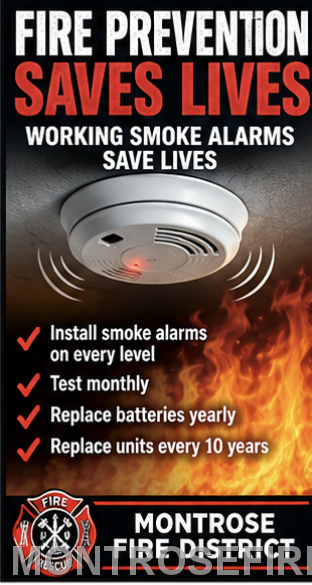
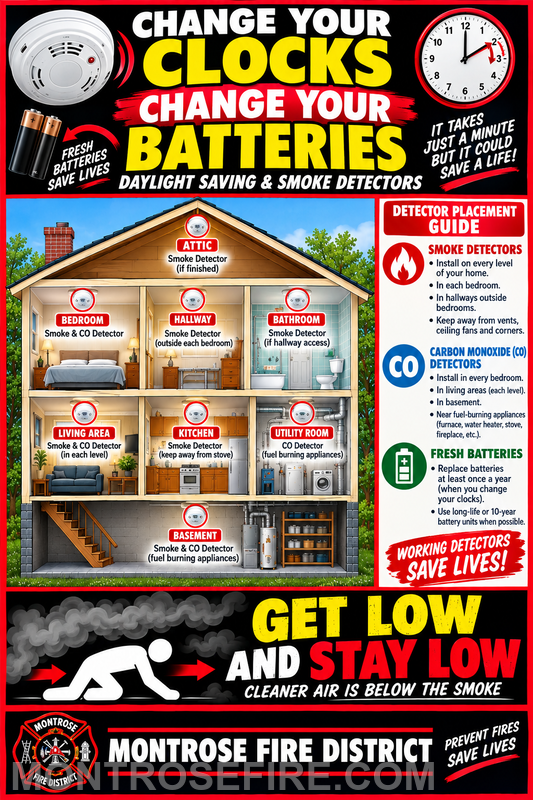
| Smoke & Carbon Monoxide Detector Safety Working smoke and carbon monoxide (CO) alarms are your family’s first line of defense against fire and carbon monoxide poisoning. Make sure your home has properly installed and functioning alarms, and test them regularly. Smoke Alarm Safety Test smoke alarms monthly by pressing the test button. New York State 10-Year Sealed-Battery Law Since April 1, 2019, new or replacement residential smoke alarms sold in New York State must be either hardwired or powered by a sealed, non-removable battery with a minimum 10-year battery life. These 10-year sealed-battery alarms do not require routine battery replacement. However, the entire alarm must be replaced when it reaches the end of its service life—generally 10 years from the date of manufacture or as specified by the manufacturer. Remember: A 10-year battery does not mean the alarm lasts forever. Replace the entire alarm after 10 years or if the unit becomes faulty. Carbon Monoxide (CO) Alarm Safety Carbon monoxide is an odorless, colorless and potentially deadly gas produced by fuel-burning appliances and equipment. If an Alarm Sounds SMOKE ALARM: Get everyone outside immediately and call 911 from a safe location. Do not re-enter the building until emergency personnel determine that it is safe. CO ALARM: Get everyone into fresh air immediately and call 911. Do not re-enter the building until emergency personnel determine that it is safe. Symptoms of CO exposure can include headache, dizziness, nausea, fatigue, and confusion. Protect Your Family TEST IT. MAINTAIN IT. REPLACE IT. A working smoke and CO alarm can provide the warning you need to escape safely. If you have questions or concerns about fire safety, please contact us at info@montrosefire.com. For emergencies, dial 911. Stay tuned for the Day 4 Safety Memo. |
|
| Hyperlinks: | Join Our Team |
|
|
|
|
|
|